
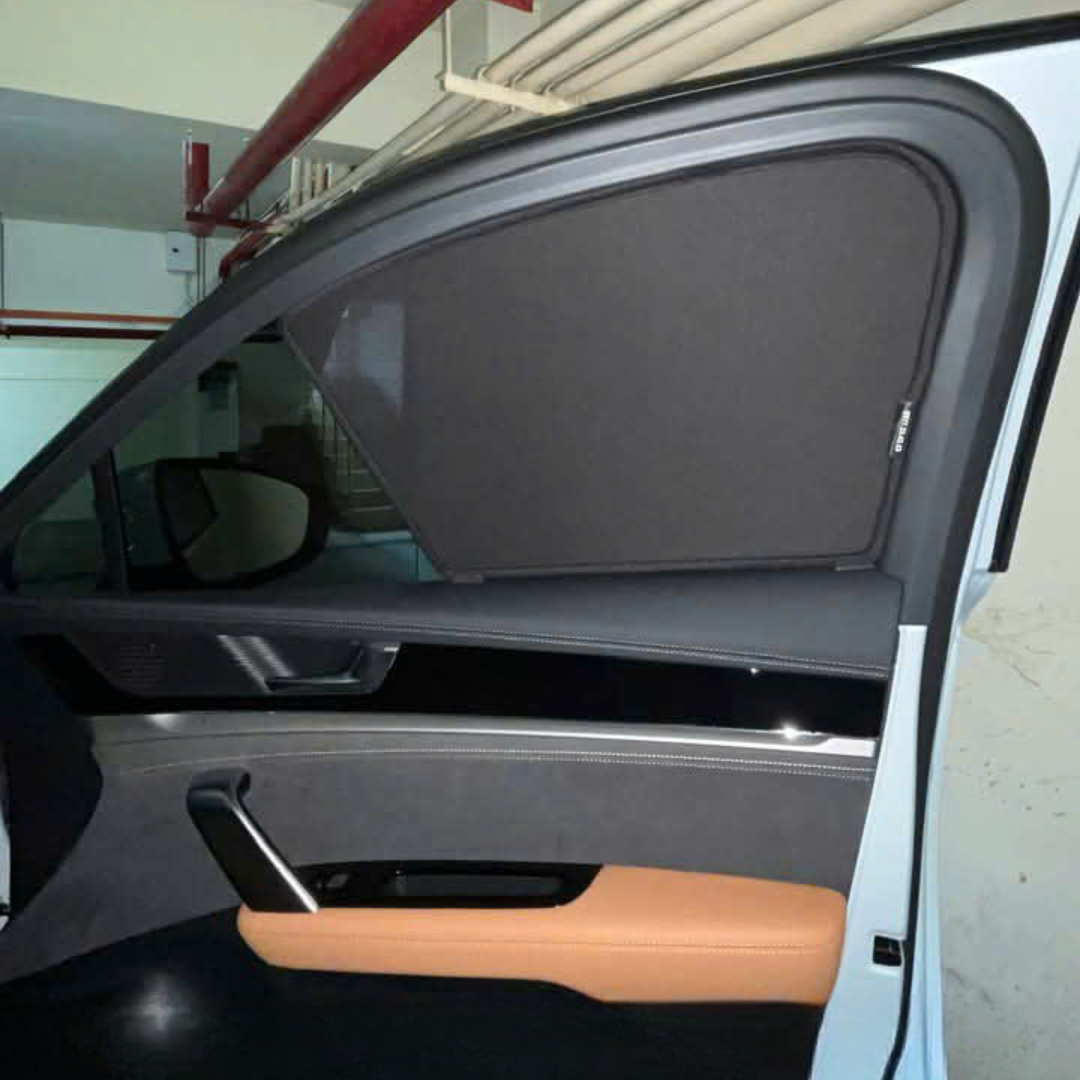
One order placed in Queensland in July 2026 covered door shades for two unrelated vehicles: BYD’s large three-row SUV, catalogued as the Tang or the Sealion 8 depending on the market, and an Isuzu D-MAX dual cab of the 2021–2025 generation. Both were ordered in the same configuration, two front panes and two rear. The pairing tells us nothing about whoever placed it; the buyer appears as B.D., a state and a month, and this is a record of two sets that went out rather than a review of them.
What the coincidence gives us is a useful accident. Two body shapes this far apart, specified to identical coverage in the same month, make it easy to see what “four doors” means once you read it as a description of where the glass sits.
BYD’s three-row SUV
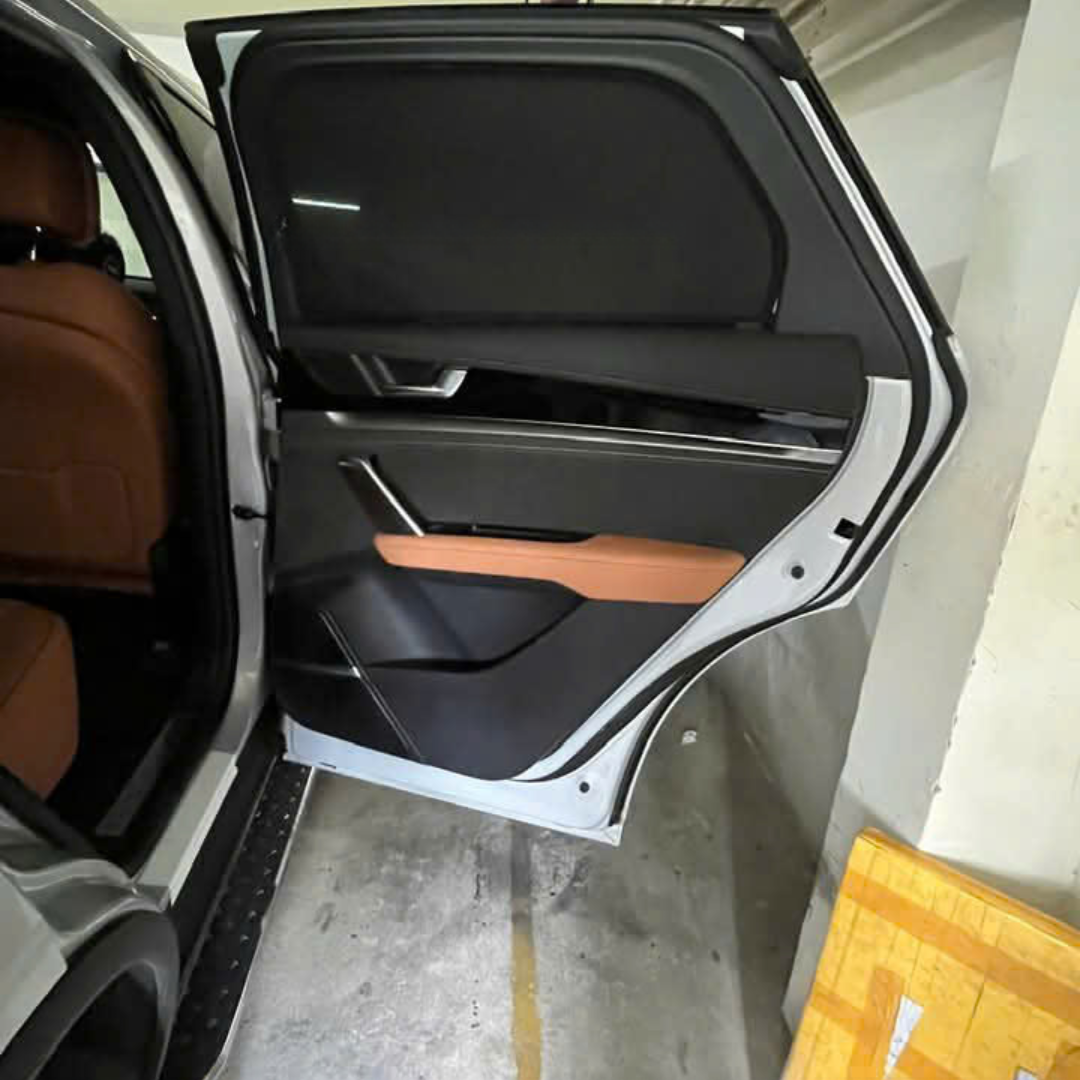
Seen side-on, this is a long vehicle whose roofline stays high almost to the tailgate, a shape forced on it by seating a third row of adults rather than children. The consequence is a generous second-row door pane: tall, long, only gently tapered towards the rear.
The front pane follows a steeply laid A-pillar, so it runs longer along its bottom edge than its top and narrows to a point near the mirror. The rear pane is squarer and closer to upright; on a vehicle this size the difference is obvious rather than marginal.
The third row is the part worth naming. On this class of SUV the rearmost seats sit beside fixed glass set into the body, not beside a door. A four-pane set therefore covers the first two rows and stops — less a shortfall than a fact about where doors are.
The D-MAX dual cab
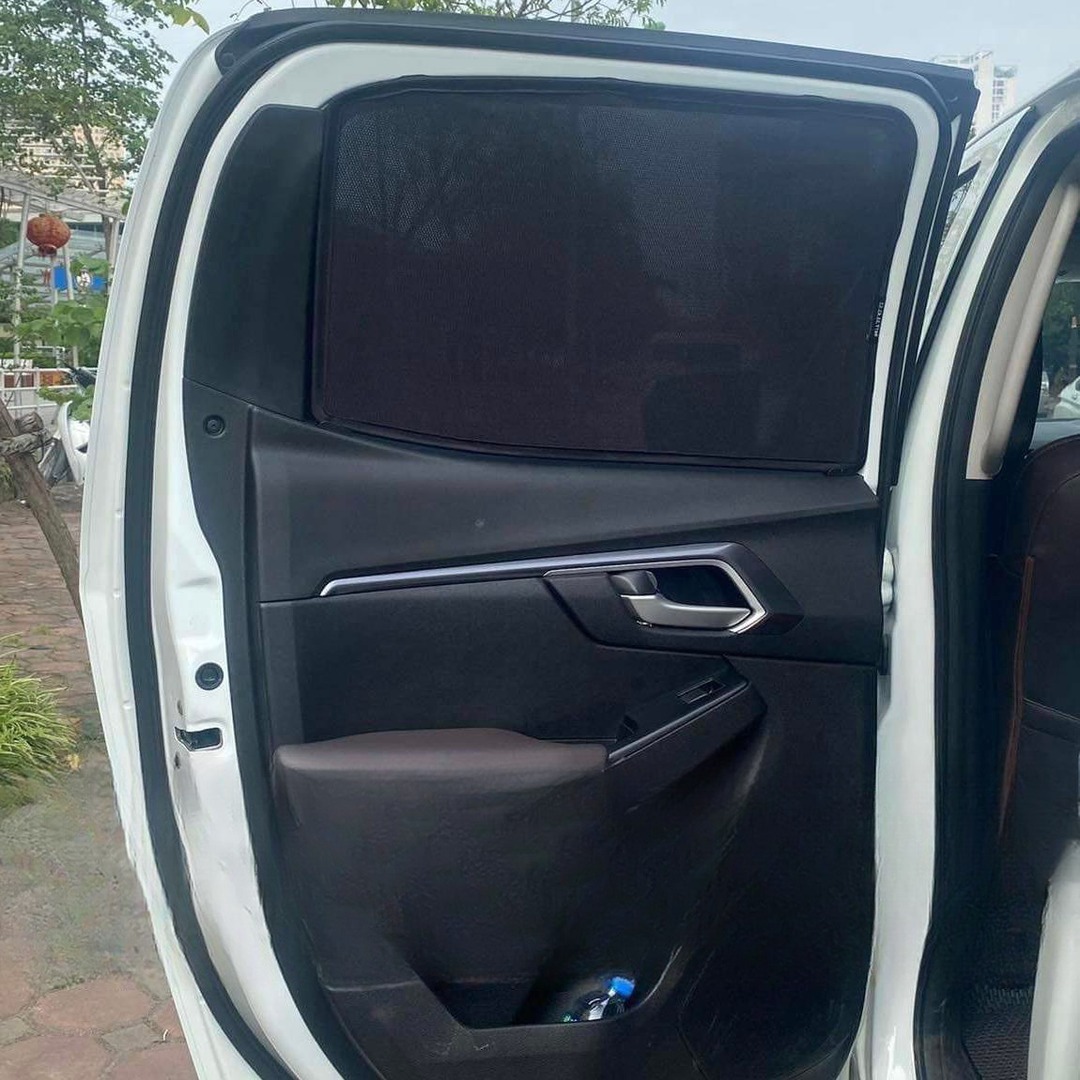
A dual cab is a different problem, because the cabin is a box sitting between a bonnet and a tray. The sides are close to upright, the belt line runs flat and high, with far less rake through the glass than a passenger car of comparable footprint carries.
The two panes also differ in size more sharply than they would on a wagon. The front is long, because a front door has to reach forward far enough to be usable. The rear is noticeably shorter and much closer to rectangular: a dual cab’s back doors are the compromise that lets the tray exist.
Behind the rear door the cabin ends. Four panes here is not a partial fit-out: it is every window a passenger sits beside, and what remains is the windscreen and the pane behind the seats.
Both columns land in the same place
Set the two descriptions beside each other and they share no geometry. One rakes and tapers; the other stands up straight. One carries a third row alongside fixed glass; the other stops at the second row. As pattern-cutting jobs they are unrelated.
Yet both went out as four panes, front doors and rear doors, for the same reason: those are the rows that carry people.
Four doors is not a size. It is a claim about which rows you expect to be occupied.
The instinct is to scale coverage to the vehicle — a big SUV needs more, a work ute needs less — and it is wrong in both directions. A three-row SUV on four panes leaves its rearmost seats bare if anyone rides back there; the same four panes on a dual cab are complete.
A coda on the new arrivals
One asymmetry between the halves of this order will recur. The D-MAX generation has been on Australian roads for years and its patterns are long settled. The current wave of Chinese SUVs, electric and plug-in hybrid alike, arrives faster than the aftermarket cuts patterns for it, so for a recent landing the honest answer is sometimes “not yet”.
Naming compounds it. This car sits in the catalogue under two names, Tang and Sealion 8, because the same basic vehicle wears different badges in different markets, and names in this segment are reshuffled quickly enough that a year-old forum thread can send you to the wrong car. Confirm the exact model and build year rather than reasoning from a badge.
The four-pane set for the BYD, under either name, is listed at CarShade; the D-MAX set is catalogued separately. This site sells nothing and has no interest in whether you buy it.