
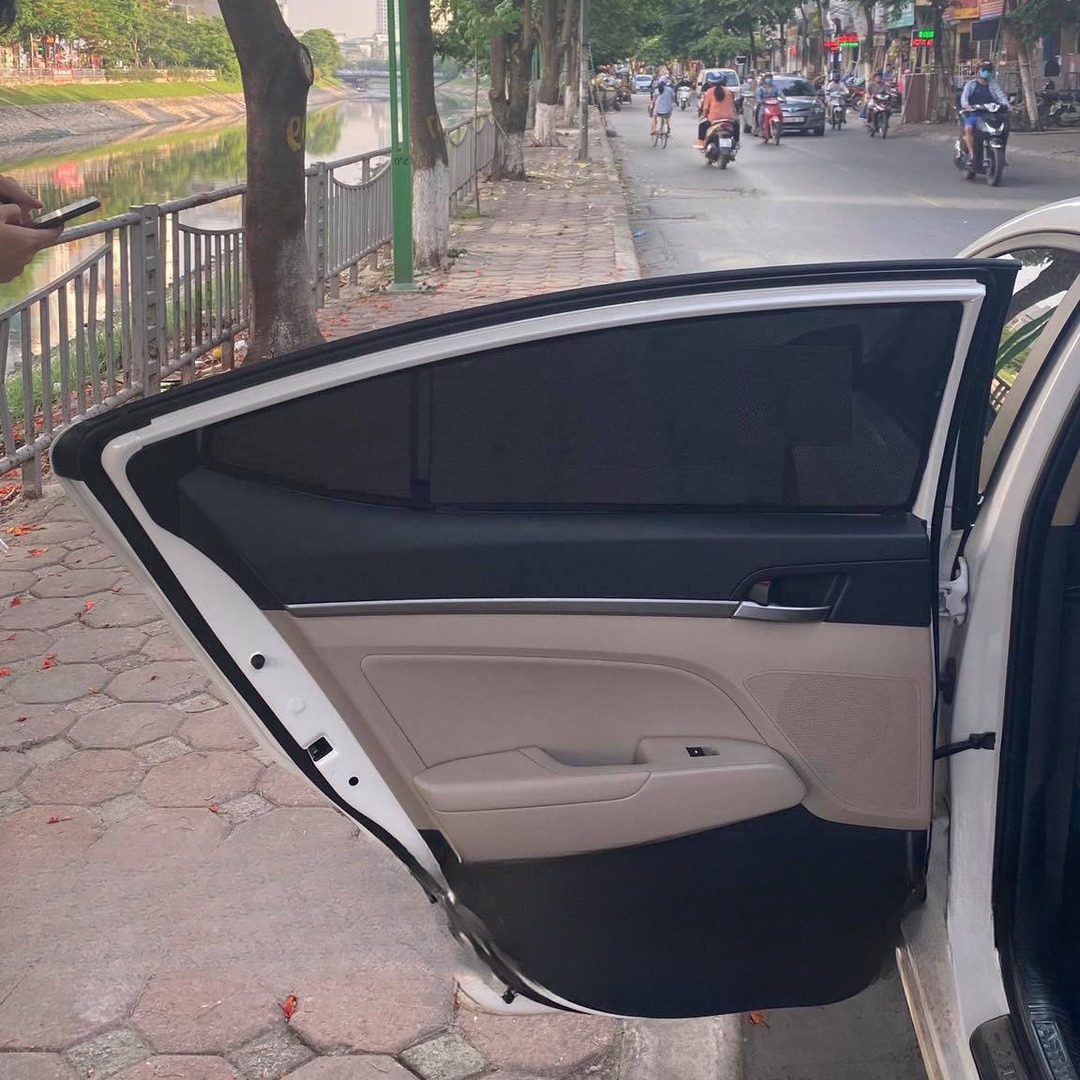
Do this standing at the car, in order. You will finish with a generation and a build month — what a shade listing is really asking for.
1. Read the badge, then read the body
Go to the boot lid and read the badge. You want Elantra, and you want four doors with a separate boot rather than a hatch. If either is not true, stop: nothing below describes your car’s apertures.
2. Find the build plate
Open the driver’s door and look at the aperture — the pillar face and the sill the door shuts onto. Hyundais of this era usually carry a plate or label in there. If yours does not, check the firewall and slam panel under the bonnet; one of the two will have it. What you want off it is a build date: a month and a year.
The plate beats the paperwork
The year in an ad, or on your registration, is when the car was sold. The build date is when the body was assembled, which is the date tied to the tooling that pressed the doors. A car advertised as an early 2017 is often a late 2016 build. That gap is trivia; on a generation boundary it is the whole question — a boundary is where panels stop sitting flush and start being roughly the right shape.
3. Put the date in a window
The generation you are testing for arrived in 2016 and ran to 2020. If your build date sits inside that, you have it. Earlier or later is a different generation, with different door apertures.
4. Ignore the nose and the tail lights
This is the step people skip. The car was facelifted in 2019 — new front, new rear, different lights — and the two halves photograph like different models. The passenger door glass was left essentially alone, so the restyle matters enormously when you match a listing photo to your car and hardly at all when you match shades. Do not let a reshaped bumper argue you out of a correct fit.
5. Check the two apertures that matter
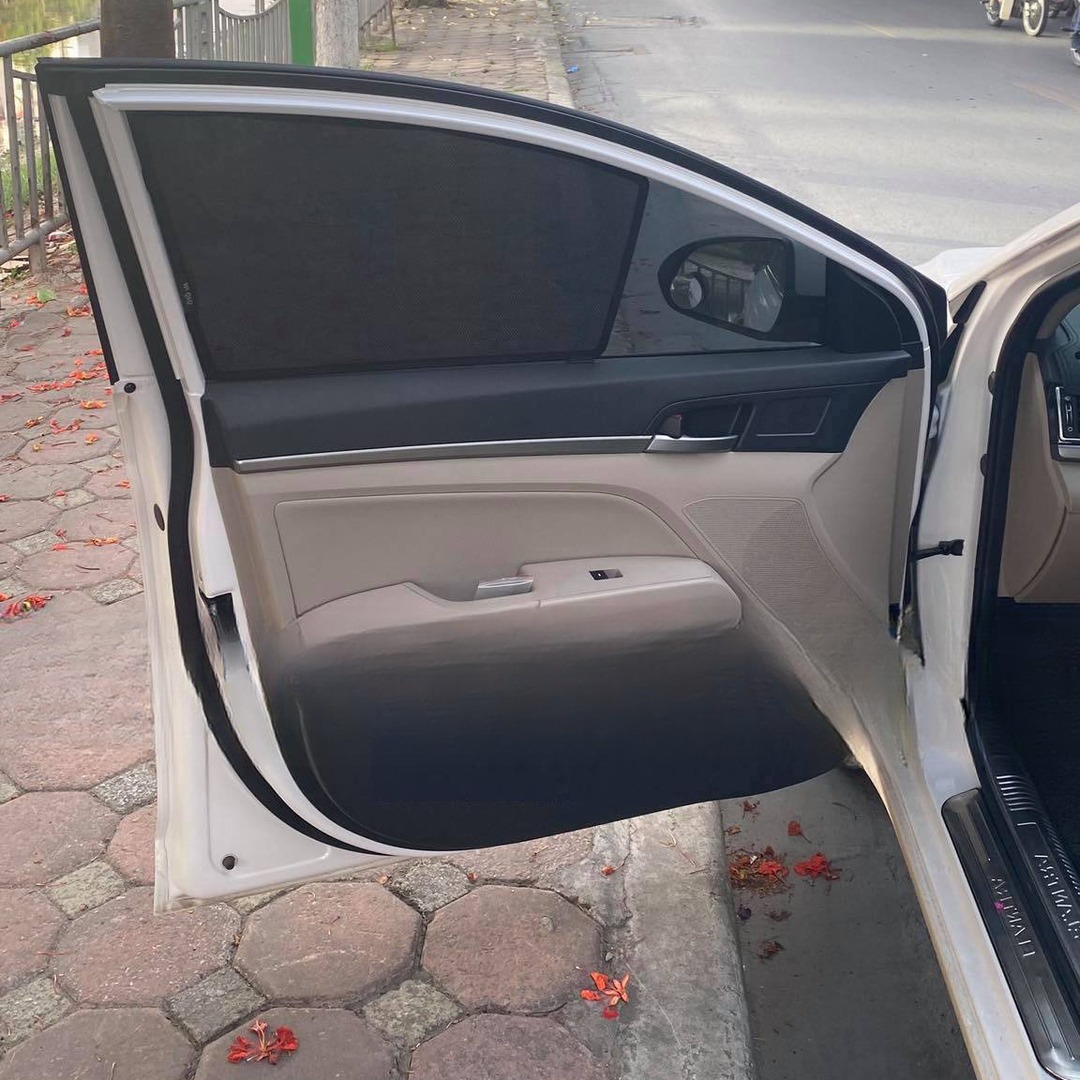
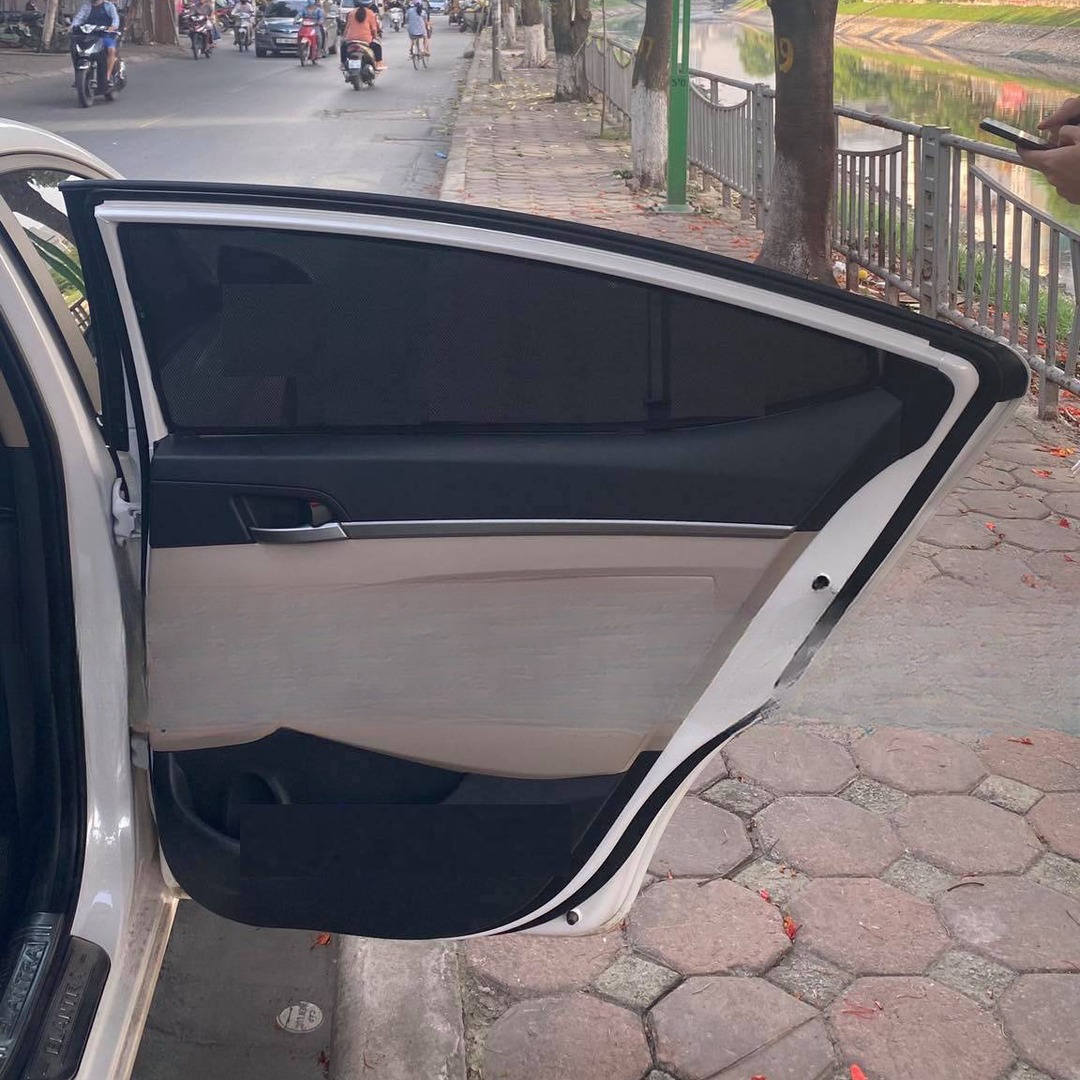
Open a front door and a rear door and look at the glass, not the car. At the front: one large pane, with a small fixed triangle ahead of it by the mirror that a front panel leaves alone. At the rear: a shorter pane narrowing as it runs back, the taper carried by the door frame, and no separate quarter window in the bodywork behind the rear door. Those two shapes are what a set is cut to.
6. Say the answer out loud
You should now be able to finish this sentence: the car in front of you is the 2016 to 2020 Elantra, built in such-and-such a month. If you cannot, you skipped the plate — go back to step 2. Then read year ranges as approximations. The set linked below is titled 2017–2020 while the tooling it fits begins in 2016; that year is rounding in a product title, not a different door. Where a range is off by a year or two but the generation matches, the generation governs.
Write the generation and build month down, and shop by generation from then on. The set described here — four panels, two front and two rear — is the one supplied to A.L. in Queensland in June 2026, available as the Elantra 2017–2020 window shade set. One thing this page cannot tell you is whether anyone liked it: nobody was asked, so the buyer stays two initials and a state, and the photographs stand for the panel pattern on this generation rather than for any one car.